
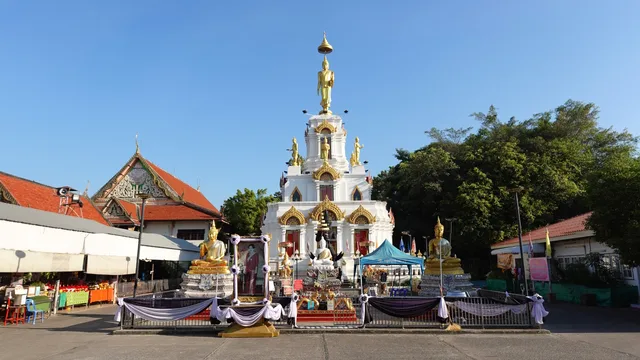
Wat Bang Nam Phueng Nai
Phra Pradaeng · Samut PrakanWelcome to Wat Bang Nam Phueng Nai. This Buddhist monastery stands in Phra Pradaeng District, in Samut Prakan Province. It lies on the Bang Kachao peninsula, a piece of land formed by a loop of the Chao Phraya River. This is not a great royal monument. It is a village temple, and its value lies above all in the life of its community.
Its name reads like an address. 'Wat' means the monastery. 'Bang' means a settlement by the water. 'Nam phueng' means honey. So Bang Nam Phueng is the honey settlement. The last word, 'nai', means 'inner'. It answers the word 'nok', 'outer', which appears in the name of another, older monastery in the same tambon: Wat Bang Nam Phueng Nok. The two temples have twin names. Yet their histories, their buildings and their status are different.
The monastery was founded around 1907. The name of its founder is not known. It is first called Wat Dusitharam. In 1917, it takes its present name. Its leading figure at that time is the monk Phra Khru Wibun Thammakhut, known as Tuan. Much later, in 2010, the temple receives its consecrated ground by royal decree. This is the marked-out space where ordination ceremonies take place.
Local people also tell of another origin. According to local tradition, honey from the area is said to have cured a princess who had long been ill. In thanksgiving, a figure named Chao Sai Nam Phueng is said to have had Wat Bang Nam Phueng Nok built. Queen Suchada is said to have had this temple raised, first called by her name, Wat Suchada. This story is a legend: its characters are not attested by history. But it shows how the village links its two temples, its name and its honey.
The temple spreads across a low-lying plain. It includes an ubosot, the ordination hall, built of rendered brick. It serves the monks first of all, for ordinations and ritual acts. It also includes a sala kanparian, the preaching hall, built of wood. The faithful come here to listen to sermons and to take part in offerings and ceremonies. Another part of the grounds is given over to the daily life of the monks. Here you find their cells, the kuti, mostly made of wood, a bell tower, a chanting hall and a library. The architectural interest remains modest. What matters most lies elsewhere.
The monastery is the religious centre and the gathering place of the Mon community of Bang Kachao. The Mon have their own language and their own traditions. They have a strong presence in the Phra Pradaeng area. For them, the temple is not only a place of prayer: it is where people meet and where they celebrate. The monastery also plays a role in education.
Several shared traditions live on here. People cook kalamae together, a sweet made of sticky rice and coconut that must be stirred for a long time. They practise an alms offering of honey, the tak bat nam phueng: the faithful offer honey to the monks. And games are organised at Songkran, the traditional New Year.
The monastery is still lived in. In 2025, nineteen monks were in residence during the rains retreat. That same year, the temple took part in a kathin campaign, the ceremony in which the faithful offer the monks robes and the goods needed for monastic life. The faithful also come here to venerate relics of the Buddha. Finally, the temple stands next to Bang Nam Phueng Floating Market, open on Saturdays, Sundays and public holidays.
Remember this: Wat Bang Nam Phueng Nai is not an exceptional monument. It is living heritage, carried by its monks, by its faithful and by the Mon community that keeps it alive.
Photo : © Eric Monteil
Source: JARUK