
Khlong Bon Folk Museum
Phra Pradaeng · Samut PrakanWelcome to the Khlong Bon Folk Museum, in Ban Khlong Bon, in the Bang Kachao loop, south of Bangkok. This place is neither a monument nor an institution. It is a house, where a local couple have set up a private, family museum. Here, ordinary objects tell the story of local life.
The museum takes its name from the locality. In Thai, "khlong" means a canal, and "bon" means "upper" or "above". The place belongs to the Bang Kobua community, in Phra Pradaeng District, Samut Prakan Province. This community occupies part of the Bang Kachao loop, the wide meander of the Chao Phraya River.
Behind the museum is a couple. Sangwuan Kraisomphot, known as Lung Daeng, which means "Uncle Daeng", is its owner and collector. His wife, Nutchari Kraisomphot, known as Pa Nut, "Auntie Nut", founded the museum with him. She runs it by his side. So you are in the very home of its founders.
Before it was a museum, it was a collection, built up over more than thirty years. The starting point was modest. The couple, of humble origins, chose to keep and display these objects, rather than throw them away or sell them.
The collection brings together the objects of a domestic, working life. You can see silverware and blue and white porcelain. Alongside them are simpler pottery and kitchen utensils. The farming tools recall work on the land. The old coins evoke the trade of days gone by. Finally, the collection includes old boats.
The couple describe these pieces as things "hard to see nowadays". They keep them so that young people can learn what their elders' lives were like. So the museum has a simple educational purpose: to show, through objects, the way of life of the people of the area.
The move from collection to museum was marked by an official opening ceremony. Lung Daeng was sixty-seven at the time. The ceremony was presided over by General Jariya Thongthap. The place was presented as a folk museum devoted to the way of life of the Phra Pradaeng community.
The founders say they had visited only one other museum before creating their own: the Wat Tha Phut folk museum, housed in a Buddhist monastery. With this single model, they devised their own way of displaying objects. In twenty twenty-three, this freedom was read as an example of history "from below" and "for those below". National museums tend to tell history as seen from above. Here, the museum is made by local people, for local people.
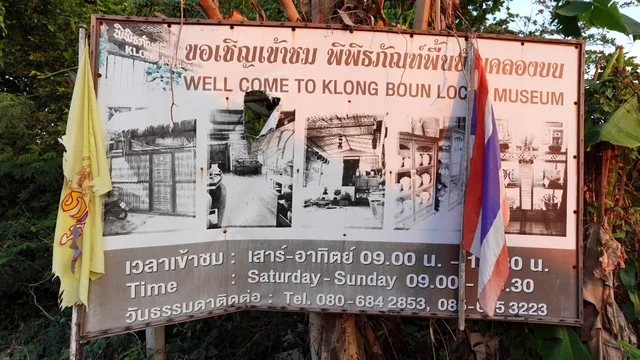
The museum remains a family affair. It opens on Saturdays, Sundays and public holidays, from nine in the morning until five in the afternoon. Entry is free, and you are welcome to leave a donation. Meals can be served if ordered in advance from Lung Daeng. The collection also lives beyond these walls. Some objects are lent for exhibitions, and others are used as props in television series.
The museum is part of Bang Kobua's community tourism offer. It is one of the stops on the cycling tours that wind through the community. The community is presented as a "low-carbon" destination, recognised with a Gold Kinnaree award. In twenty twenty-three, the national press published an analysis of the museum, and a television programme devoted a report to it.
Remember this: this museum was born of a life. By keeping everyday objects, Lung Daeng and Pa Nut tell the story of a riverside community on the Chao Phraya through its daily life.
Photo : © Eric Monteil
Source: JARUK