
Sampheng Market (Chinatown)
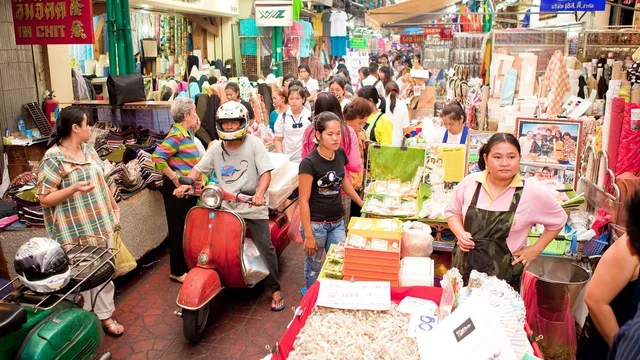
Samphanthawong · BangkokWelcome to Sampheng Market (Chinatown), Bangkok's historic Chinatown. You are in a market lane just over a kilometre long. It is the original heart of the capital's Chinese quarter. It is also one of its oldest centres of trade.
Look along the lane. It is narrow and reserved for pedestrians. It is lined with shophouses. These are narrow, terraced buildings, with the shop on the ground floor and storeys above. Many passages open off to the sides. Today Sampheng is one of Bangkok's great wholesale markets, but it also sells retail. You will find clothes, watches, toys, accessories and food. Traders come here to stock up in bulk. Private shoppers come looking for bargains.
On the signs, you may read another name: Soi Wanit 1. A government notice renamed the street with a Thai word meaning "trade". But everyday usage did not follow: everyone still says Sampheng. The origin of that name remains uncertain. There are many theories, and none has prevailed.
The story of this place begins in 1782. That year, Rama I founds a new capital on the east bank of the Chao Phraya. The land chosen for the Grand Palace is then occupied by Chinese settlers. The king orders them to move. They are resettled between two canals, on marshy ground. A small path links this area to the walled city. That track becomes the lane where you are standing.
By around 1785, the lane already forms the heart of the Chinese quarter. At the time, Bangkok is mainly a city of canals and floating houses. Sampheng is the exception: Chinese merchants build brick houses here, set on solid ground. In the nineteenth century, it is the largest land-based market in the city. Silks, tea, glassware, gold and iron tools from China are sold here. So are ritual offerings and salted fish for the Chinese community.
The quarter is very crowded, and its tightly packed bamboo houses often catch fire. The Thai language still bears the mark. In betting on Thai boxing, the expression "Sampheng fire" means the unexpected defeat of a favourite, which ruins the punters at a stroke.
In the late nineteenth century, the quarter is also linked with gambling, opium and prostitution. Trade by day and pleasure by night share the same lanes. Later, Yaowarat Road, opened after the lane, overtakes it in size and importance. Yet Sampheng does not decline: the lane remains prosperous. The quarter still lives to the rhythm of Chinese festivals, above all Chinese New Year.
The present brings new difficulties. In 2019, the press reports the weakest trade here in half a century. The cause put forward is the rise of online shopping. Fire also remains a danger. On the twenty-sixth of June 2022, a blaze destroys several shophouses on Ratchawong Road, leaving people dead and injured.
Remember this: this lane was born from a path through the marshes, when the Chinese gave up their land for the Grand Palace. For more than two centuries, it has remained above all a place of trade, the original heart of Bangkok's Chinese quarter.
Photo : © Eric Monteil
Source: JARUK