
Embassy of France
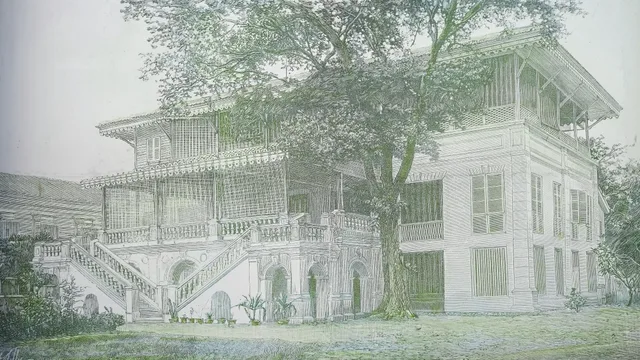
Bang Rak · BangkokWelcome to the Embassy of France, on the banks of the Chao Phraya, in the Bang Rak district of Bangkok. It is one of the oldest diplomatic missions in the country. This place tells the story of more than a century and a half of relations between France and Siam.
Two very different buildings stand on this site. The old house, built partly of teak, is the Résidence de France, the official residence of the ambassador. The modern building, opened in 2015, houses all of the embassy's departments.
The old house existed before the French arrived. It was a Siamese customs building, generally dated to the 1840s and 1850s. The name of the lane still bears witness to this: Soi Rong Phasi. In Thai, rong phasi means a tax office.
The French settled here after the treaty signed with Siam in 1856. In 1857, King Mongkut, Rama the Fourth, granted them the use of the land to establish a consulate. In 1875, King Chulalongkorn, Rama the Fifth, gave the land and the building to France.
Notice how the buildings are oriented. The residence and the modern building face the river and turn their backs to the road. In the middle of the nineteenth century, the only way to arrive here was by water. Between the house and the riverbank lies a tropical garden, with a clearly visible flagpole.
Over time, the house was extensively remodelled. In 1892, the consulate became a legation. The following year, during the Franco-Siamese crisis of 1893, French ships sailed up the Chao Phraya and dropped anchor in front of the mission. An engraving from 1893, hanging on the first floor, shows the ship Le Lutin moored in front of the residence.
In 1901, major works gave the house most of its present structure: a teak building, a dining room, a veranda, a quay and a pontoon on the river. The customs office became a kind of "little palace". It is a colonial-style mansion on three levels, arranged around a grand central staircase.
In the twentieth century, France considered leaving this site. There was even talk of demolishing the building. But several heads of mission defended the site, among them the writer Paul Morand. In 1930, the French community unanimously rejected the move. After 1945, the legation stood abandoned for two to three years. It became an embassy in 1949.
Today, the Residence hosts receptions and official meetings. Every year, in September, it opens its doors for the European Heritage Days. The Association of Siamese Architects has awarded it its Architectural Conservation Award.
Remember this: since the middle of the nineteenth century, France has occupied this site, and this house, which has changed in both purpose and appearance, still looks out over the Chao Phraya.
The Mural Trail of the Embassy of France
 1At the Origins of Cave Art
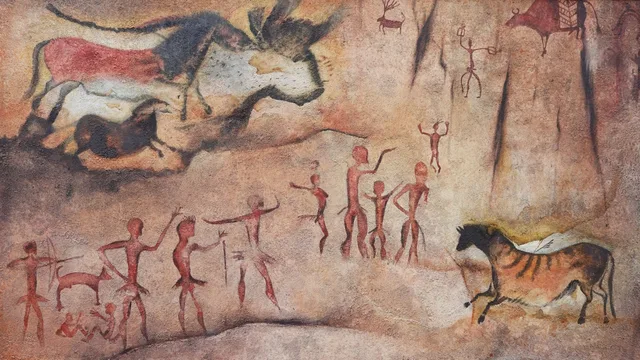
In France as in Thailand, prehistoric wall paintings depict mainly animals, a sign of the close bond between societies and their natural environment. In the Dordogne, the works in the Lascaux cave, dated to around 18,000 years ago, depict horses and aurochs in particular, among other species: hence its nickname, the 'Sistine Chapel of Prehistory'. In Thailand, the paintings of Khao Pla Ra (Uthai Thani) and Tham Khao Chan Ngam (Korat), made some 3,000 years ago with natural pigments, combine human and animal figures, reflecting an ancient agrarian society.
 2The Morris Column
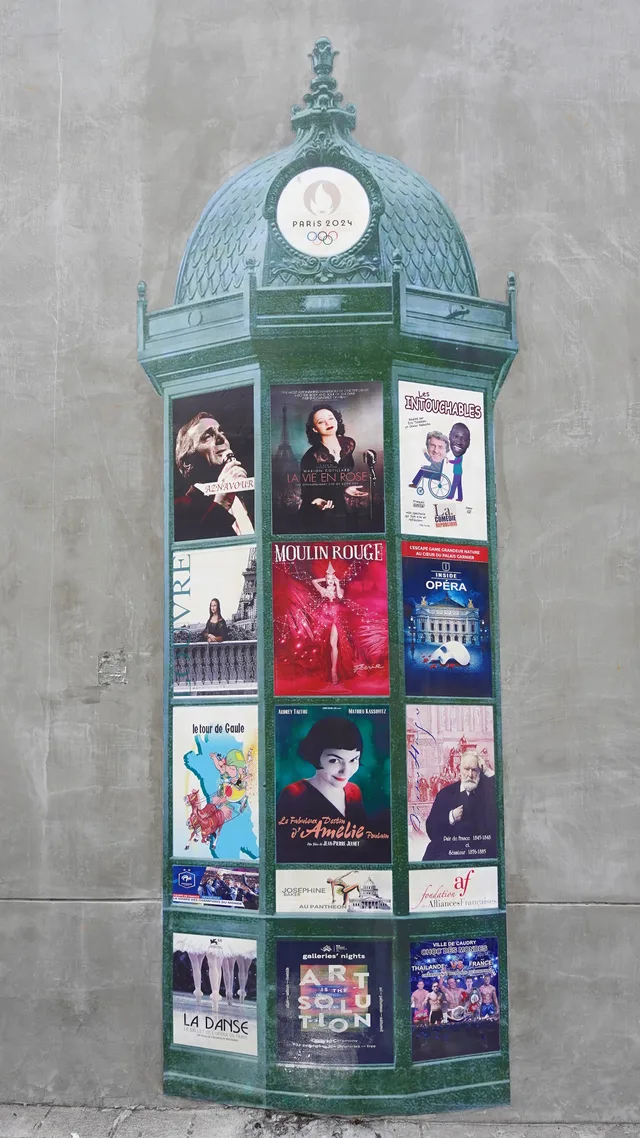
Introduced in Paris in 1868 by the printer Gabriel Morris, Morris columns became emblematic features of the urban landscape. Painted green and topped with a hexagonal canopy crowned by a dome, they were used to display posters for shows while protecting them from the weather. These Belle Époque cast-iron structures multiplied along the Grands Boulevards until the early twentieth century to promote cultural events. The column painted by the artist celebrates the Paris 2024 Olympic Games and displays various announcements, some of which refer to Thailand.
 3Markets of Bygone Days
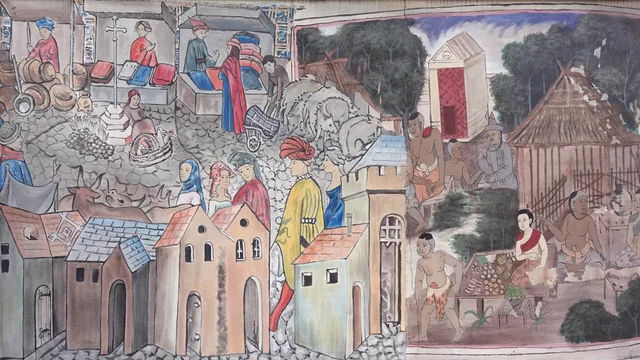
In France since the Middle Ages, as in Thailand, markets have always been nerve centres of social and economic life. In France, the great medieval fairs, notably those of Champagne and Brie, offered textiles, ceramics and livestock, even in times of health crisis. In Thailand, markets, or talat, are often set up along waterways, a legacy of the traditional way of life of riverside communities. They offer a wide variety of produce, from fruit, vegetables, fish, seafood, meat and spices to cooked dishes, which today attract many tourists.
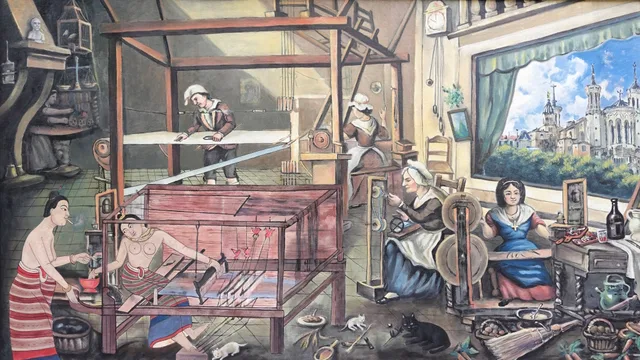 4On the Trail of the Silk Road
The history of exchanges between Asia and Europe runs notably through the famous Silk Road, which brought Chinese silk into France during the Renaissance, by way of Italy. In the nineteenth century, Lyon saw the flourishing of a weaving workshop heir to the Fabrique lyonnaise silk industry, founded in the sixteenth century under the aegis of Francis I to rival Italy. The canuts, Lyon's silk weavers, lived in the Croix-Rousse district, nicknamed 'the hill that works'. In the same period in Thailand, the king of Nan was restoring temples such as Wat Phumin, adorned with murals depicting the life of the Thai Lü and women weaving in sarongs. The discoveries at Ban Chiang attest to an ancient tradition of sericulture, revived in the twentieth century by Jim Thompson, then by Queen Sirikit through the SUPPORT Foundation.
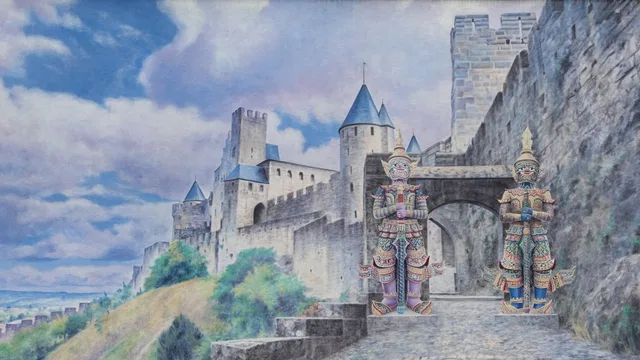 5The City of Carcassonne Guarded by Yakshas
In the fourteenth century, Carcassonne, in present-day Occitanie, was renowned for its medieval citadel, protected by a double ring of walls with fifty-two towers. Among its curiosities are two giant Yakshas from Thailand, recognisable by their large round eyes, prominent fangs and green or purple skin. These mythical figures of the Ramakien, which likewise appeared in the fourteenth century, have guarded Wat Phra Kaeo, the Temple of the Emerald Buddha, in Bangkok since the eighteenth century.
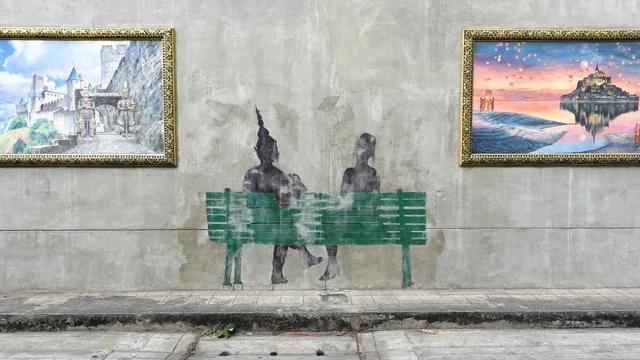 6Public Benches
Public benches naturally call to mind the famous song by Georges Brassens, written in 1953, which features lovers kissing without a care for the gaze of passers-by. These scenes, now part of France's intangible cultural heritage, were also immortalised by the photographer Robert Doisneau, who captured fleeting moments of life: couples, children, elderly people. First appearing in the Middle Ages, public benches became widespread under the Second Empire with Haussmann's urban works, which often placed them beneath the trees along the pavements of the great Parisian avenues. It is within this play of references that one can imagine a conversation between a figure wearing a traditional khon headdress and a Frenchwoman, seated side by side in front of the Embassy of France.
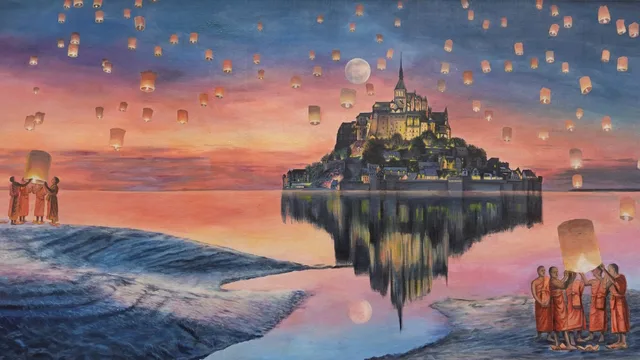 7The Festival of Lights at Mont-Saint-Michel
Dedicated to the protecting archangel of the Middle Ages, Mont-Saint-Michel stands out for its bay, governed by the rhythm of the tides, which makes it one of France's great tourist sites. At dusk, the shimmer of its waters recalls the illuminated sky of Chiang Mai during Yi Peng, the lantern festival celebrated at the full moon of the twelfth Thai lunar month. In northern Thailand, thousands of lanterns then rise into the sky, some of them released by monks in saffron robes. These khom loi, rice-paper balloons inflated by the heat of a candle, symbolise purification and homage to the ancestors.
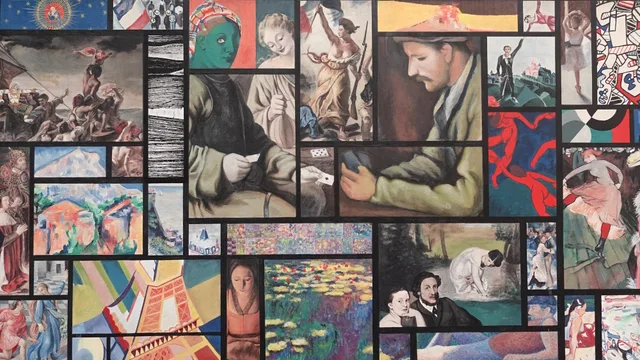 8The Mosaic of the Great Masters of Painting
Some works transcend time, and every great master has left his mark on his era. In this assemblage, fragments of paintings by celebrated French painters, from the fifteenth to the twentieth century, converse across the centuries that separate them, like card players. The everyday mingles with the heroic, the profane with the sacred. At the heart of this mosaic, Hanuman, an emblematic figure of Thai culture through the Ramakien, lies discreetly hidden. Have you spotted him?
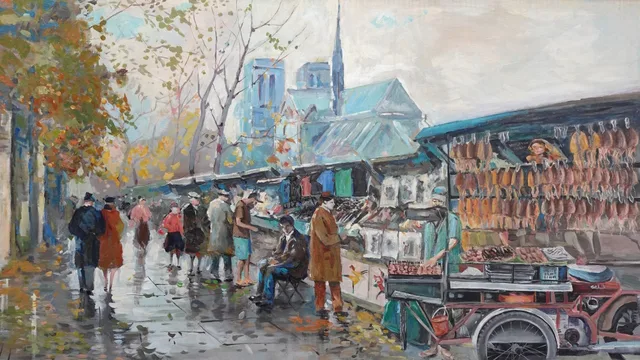 9A Franco-Thai Stroll along the Seine
The bouquinistes, traditional open-air booksellers set up along the Seine, are a vestige of Parisian street trade. From the Pont Marie to the Quai du Louvre on the Right Bank, and from the Quai de la Tournelle to the Quai Voltaire on the Left Bank, they form an open-air library of more than 300,000 second-hand books. With their boxes painted in a regulation 'wagon green', these stalls add to the charm of the quays and bear witness to the cultural and historical heritage of Paris. Bangkok has nothing comparable, but its roadside stalls of dried squid capture the attention just as much.
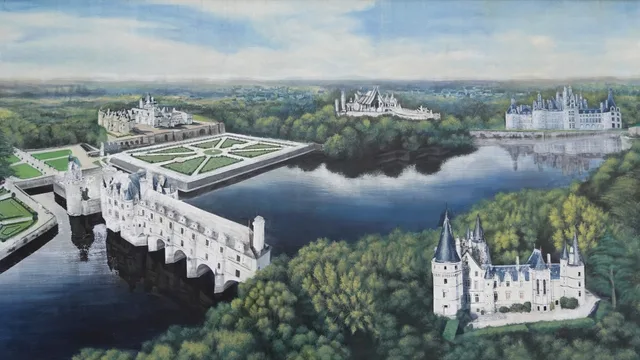 10Architectural Dialogue in the Loire Valley
Most of the châteaux of the Loire, dating largely from the fifteenth and sixteenth centuries, were built at a time when the French royal court resided in the region. Their pale hue, owed to the use of chalk, contrasts strikingly with their dark slate roofs. The Château d'Ussé is said to have inspired Perrault's Sleeping Beauty, while Chambord, the largest of the 3,000 châteaux, bears witness to the reign of Francis I. Chenonceau, built and then transformed by influential women, is nicknamed the 'Château des Dames'. The Château du Nozet, for its part, stands out for its Sauvignon Blanc vineyard. Finally, in Thailand, Wat Rong Khun, known as the White Temple, symbolises Buddhist purity; its modern design is distinguished by mirrors that reflect enlightenment.
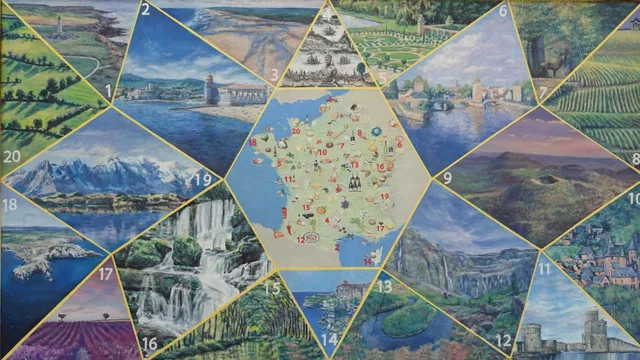 11The France of Landscapes and Gastronomic Terroirs
On his journey from Brest to Versailles in 1686, Kosa Pan crossed western France and discovered the diversity of landscapes for which the country is renowned. Comparable in area to Thailand, France offers a great variety of terrain: from the majestic peaks of the Alps and the Pyrenees to the volcanoes of Auvergne, in the heart of the Massif Central. Its coastline stretches from the North Sea to the Mediterranean, by way of the Atlantic Ocean. France is also famous for its rural landscapes, such as vineyards or the lavender fields of Provence, as well as for the richness of its urban heritage and its regional culinary specialities. Where is this great Siamese diplomat, received by King Louis XIV at the Palace of Versailles on 1 September 1686? He led the embassy sent by King Narai the Great of Ayutthaya to propose a permanent alliance between the two kingdoms.
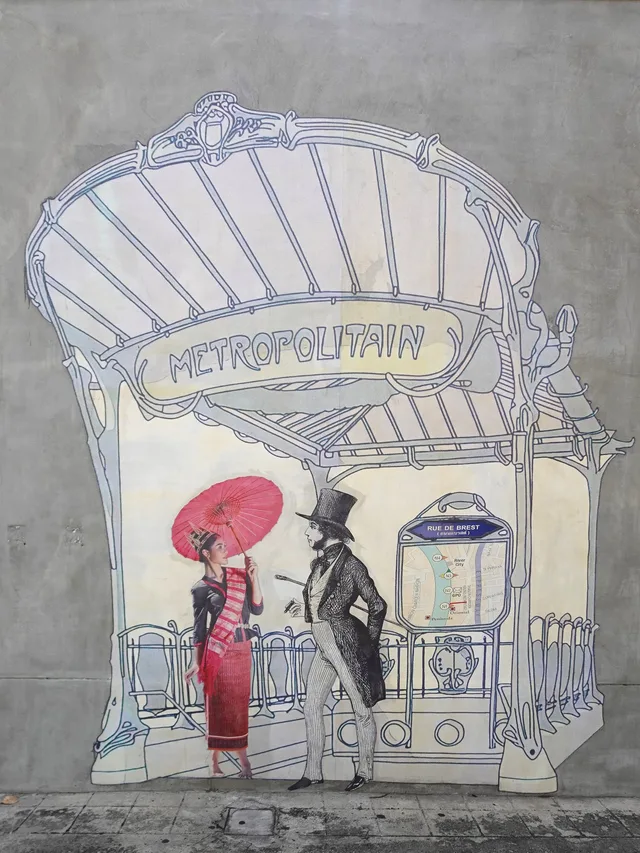 12Métro Entrances
On 19 July 1900, Line 1 of the Paris Métro was inaugurated between Porte de Vincennes and Porte Maillot, to ease access to the Summer Olympic Games held in the Bois de Vincennes. Its entrances, designed by Hector Guimard, are emblematic of Art Nouveau: cast-iron structures adorned with glass elements in plant-like forms. Later came the Kiosque des Noctambules, at Palais-Royal – Musée du Louvre station, designed by Jean-Michel Othoniel in spheres of aluminium and Murano glass. In Thailand, the entrances to the BTS and MRT networks likewise have their own formal identity.
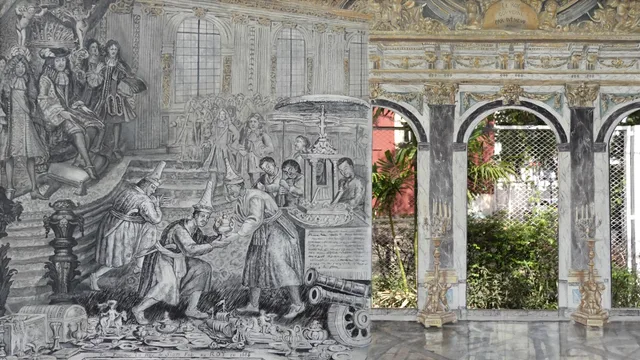 13The Hall of Mirrors at Versailles
On 1 September 1686, the Palace of Versailles shone in all its splendour to welcome the Siamese embassy. The embassy brought the Mondop containing the royal letter from King Narai the Great to Louis XIV, engraved on a sheet of gold. The exotic gifts (porcelain, jade, lacquered furniture and silks) dazzled the court, while the traditional Asian forms of greeting fascinated the onlookers. For their part, the Siamese envoys were deeply impressed by the Hall of Mirrors and its 357 perfectly aligned mirrors. King Narai the Great was not mistaken: he instructed his ambassadors to order several thousand mirrors to adorn his palaces at Ayutthaya and Lopburi.
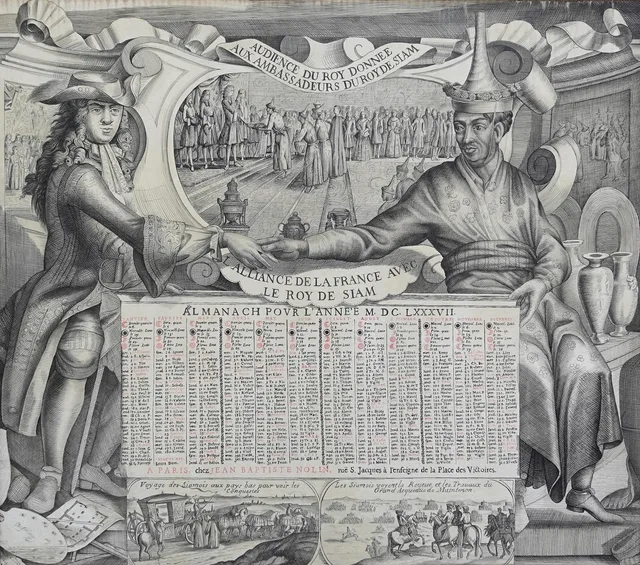 14Signing of the First Franco-Thai Treaty
The almanac of 1687 celebrates the alliance concluded in 1686 between France and Siam, a major milestone in Franco-Siamese relations. Begun as early as 1673, this rapprochement found its illustration in the formal reception of the Siamese ambassador Kosa Pan at the court of Louis XIV, who was then keen to extend French influence in Asia. Noted for his bearing and personality, Kosa Pan made a lasting impression and helped to seal a bond destined to endure, which today makes Thailand France's oldest Asian ally.
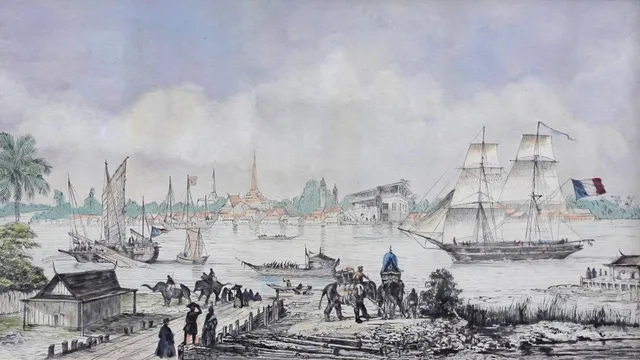 15France on the Banks of the Chao Phraya
The term 'Chao Phraya' designates both the highest Thai noble title and the great river that flows through Bangkok, a vital artery for transport and trade, on which many ships, notably French ones, long sailed. Bang Rak, the district where Europeans began to settle in the nineteenth century, is home to many Western buildings, including the Embassy of France. First established as a consulate in 1857, following a Franco-Siamese treaty, it occupies land allocated to French diplomats by King Rama IV, an allocation made official by Rama V in 1875. Renovated several times, the historic residence now stands alongside the contemporary volumes of the diplomatic offices erected in 2015. It is open to the public during the European Heritage Days, every year in September.
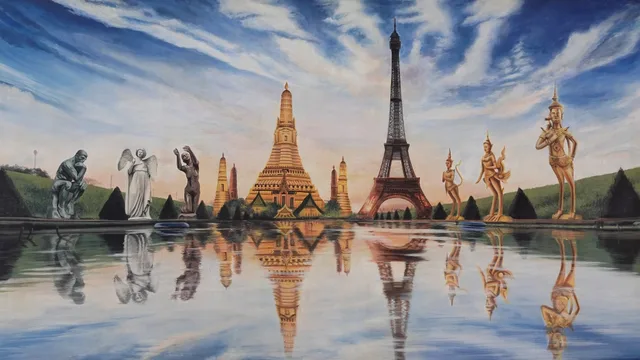 16From Wat Arun to the Eiffel Tower
The Eiffel Tower, originally built for the Exposition Universelle of 1889, is the emblem of Paris, while Wat Arun is admired at sunset from the eastern bank of the Chao Phraya. Reflected in the basin of the Trocadéro fountain, the two monuments seem frozen in time, timeless symbols of their nations. On the right, the Kinnari statues of the Temple of the Emerald Buddha embody beauty of body and mind; their replicas serve as trophies at the Bangkok Film Festival. On the left, works such as Rodin's The Thinker and The Smiling Angel express profound emotions and the bond between humanity and the divine.
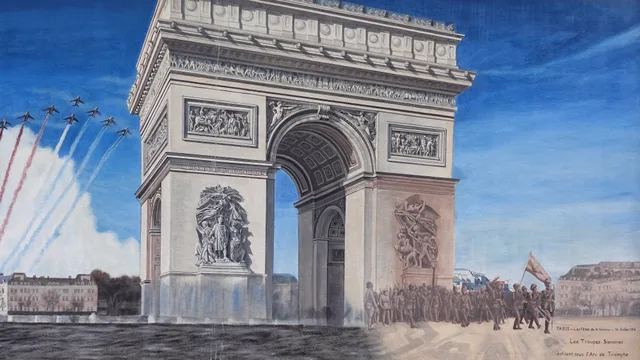 17Siamese Troops beneath the Arc de Triomphe
An emblematic monument of Paris, the Arc de Triomphe shines far beyond the capital and stands in the tradition of Roman triumphal arches. Every 14 July, the national day parade sets off from its foot towards the Place de la Concorde. It also recalls Siam's commitment: an ally of France from 1917 and a signatory to the Treaty of Versailles, the kingdom saw its troops march there in 1919. Finally, the mural echoes contemporary art, with the Arc wrapped by Christo and Jeanne-Claude in 2021.
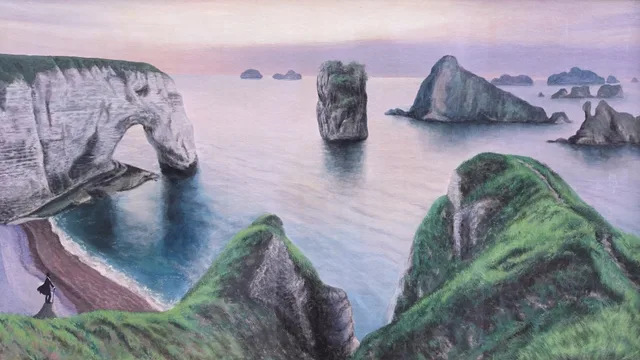 18Coastal Reverie from Étretat to Phang Nga
This coastal landscape brings together Étretat and several sites on the Thai coast. On one side, the iconic cliffs of Étretat tower over its shingle beaches, beneath the arch of the Porte d'Aval, made famous by The Hollow Needle, the Arsène Lupin adventure imagined by Maurice Leblanc. At the other end, in Phang Nga Bay, rises Khao Phing Kan, popularised by a film in the James Bond series under the name of James Bond Island. Close by emerges Ko Tapu, preserved by restrictions on approach. Finally, Koh Poda Nok, in Krabi, nicknamed Koh Kai for its silhouette resembling a chicken, completes this exotic scene.
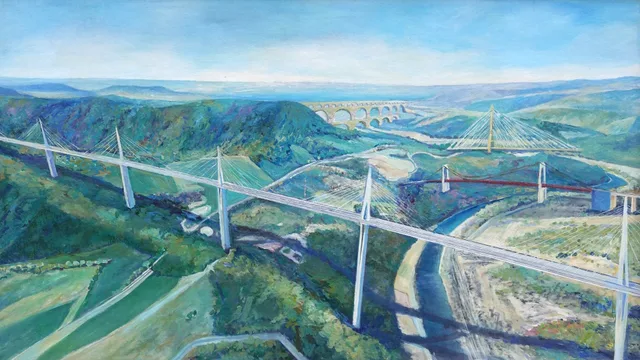 19Bridges Linking Siam and France
The famous song Sur le pont d'Avignon is known to everyone in France. Some twenty kilometres from the city stands the Pont du Gard, one of the most imposing aqueduct bridges of the ancient world. The Tancarville Bridge, a suspension bridge spanning the Seine estuary, inspired the design of the Rama VIII Bridge, built during the reign of Rama IX. Thailand's first cable-stayed bridge, the Rama VIII Bridge is distinguished by its asymmetrical design and its inverted-Y pylon. As for the Millau Viaduct, opened in 2004, it holds the record as the world's tallest cable-stayed bridge and even rises higher than the Eiffel Tower. All these achievements illustrate both Franco-Thai friendship and the major role of innovation in civil engineering.
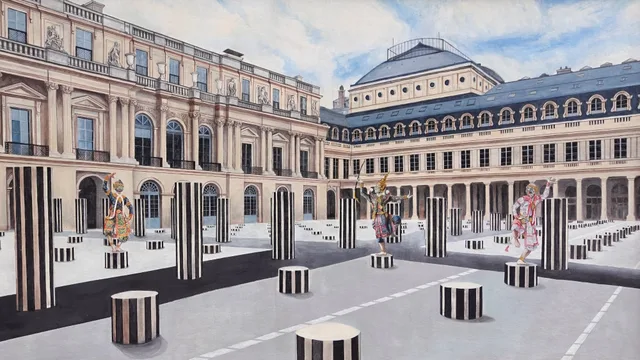 20Khon Dancers on the Buren Columns
Built in 1628 by Cardinal Richelieu, the Palais-Royal in Paris is renowned for its main courtyard, adorned since 1986 with Daniel Buren's 260 marble columns striped in black and white. Designed for interaction, they invite the public to climb them or to pose on them. An unusual spectacle unfolds there: Thai performers of khon, a stage form combining music, song, literature, dance and shimmering costumes, perform among them, thus uniting traditional art and contemporary creation, with a touch of classicism.
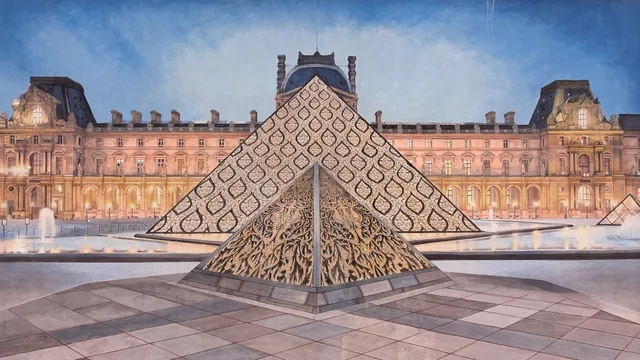 21Thai Variations on the Louvre Pyramids
The Musée du Louvre has five glass pyramids designed by the architect I. M. Pei. The main pyramid was inaugurated in 1989, the inverted pyramid in 1993. Three of them are visible here. Many artists have taken up this structure, notably JR, who in 2019 transformed it into a paper trompe-l'œil. Two of the pyramids are decorated with a motif inspired by the work of Thawan Duchanee, in which human figures, strange creatures and images of the Buddha intermingle. The triangle, a symbol of life associated with Buddhism, is accompanied by golden hues recalling the gold leaf of sacred texts.
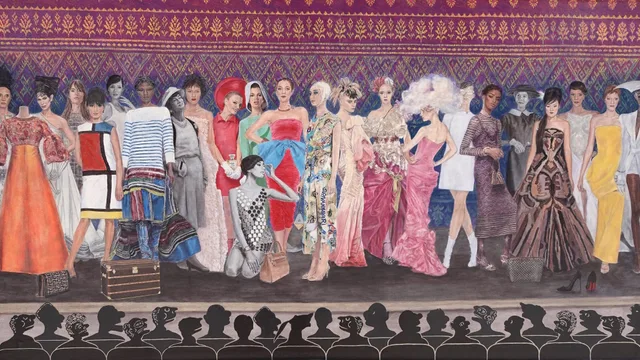 22The Parade of the Great Couturiers
Luxury and fashion readily call to mind the great French houses, which have become symbols of elegance and excellence. In Thailand, the influence of French haute couture is illustrated notably by the evening gown ('Evening Dress') created in 1969 by Pierre Balmain for Queen Sirikit, whose bodice, embroidered by François Lesage, evokes a stained-glass pattern. This twenty-two-year collaboration continues today through Princess Sirivannavari, who perpetuates the link between French and Thai dress traditions.
Photo : © Eric Monteil
Source: JARUK