
Ayutthaya Gold Treasures Pavilion
Phra Nakhon Si Ayutthaya · AyutthayaWelcome to the Ayutthaya Gold Treasure Exhibition Building. This building stands within the grounds of the Chao Sam Phraya National Museum. It opened its doors in 2022. For the first time, it brings together in one place the gold unearthed from the great monuments of the former capital.
It all begins beneath a monastery, Wat Ratchaburana. King Borommarachathirat the Second, also known as Chao Sam Phraya, had this monastery and its prang built. A prang is a tall reliquary tower with a slender silhouette. Beneath this tower lies a crypt, a closed chamber of masonry, where relics and offerings were placed. Regalia, adornments and offerings in gold were buried there, to accompany the relics. Most of the pieces on display here come from that crypt.
In the mid-1950s, the crypt was discovered, then looted. The thieves were arrested, but only part of the objects was recovered. From 1956 to 1958, the Fine Arts Department of Thailand excavated the island of Ayutthaya, above all at Wat Ratchaburana and Wat Mahathat. The excavations yielded gold, gems, images of the Buddha and hundreds of thousands of votive tablets. The treasure was saved, but it was scattered.
To keep these finds where they belonged, a museum was built in Ayutthaya. It is described as the first national museum opened outside Bangkok. The treasure itself paid for its construction: votive tablets from the crypt were given to the public in exchange for sums of money. By royal permission, the museum received the name of Chao Sam Phraya, the king who founded Wat Ratchaburana.
In 2014, the Fine Arts Department decided to renovate the whole museum and to give the gold a building of its own. The opening took place on the twenty-ninth of December 2022. The gold objects from Wat Ratchaburana kept in Bangkok then returned to Ayutthaya. The building rises over two floors, in a style known in Thailand as "applied Thai": contemporary architecture that adapts traditional forms.
The exhibition unfolds in three parts. The first presents the gold of kingship: regalia, that is, the insignia of royal power, utensils intended for the sovereign, and adornments. Here you see the ceremonial sword Phra Saeng Khan Chai Si, a crown, and a small royal elephant with its rider, rendered in gold. These objects were not used at court. They were placed alongside the relics.
The second part shows the gold offered to the Buddha: offerings, votive tablets, amulets and images of the Buddha, some of them in gold. Fine sheets of gold bear the image of the Buddha, cut out and embossed in very thin metal. A reconstruction shows the crypt as it was before the excavations. The real crypt is no longer open to visitors.
The third part widens the view to other monuments in the province, such as the prang of Wat Mahathat or the chedi of Wat Phra Si Sanphet. A chedi is a bell-shaped reliquary monument. Everywhere, relics of the Buddha were sealed in with precious objects.
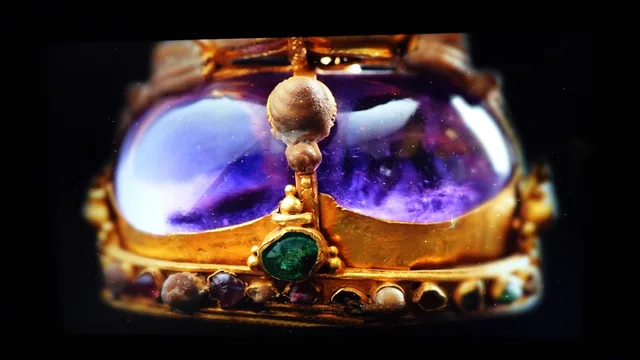
Take a look, too, at the stupa-shaped reliquary. Red spinels, stones brought from elsewhere, adorn its top. Inside, a small gold box holds a relic of the Buddha, surrounded by gems, like a monument in miniature.
Redesigned lighting and display cases open on every side reveal details of goldsmithing that were once hidden. Yet these pieces were never made to be seen. They accompanied relics at the heart of sealed monuments.
To remember: born of the looting of a royal crypt, this building at last brings Ayutthaya's gold together, and lets you read kingship, Buddhist devotion and the enshrining of relics side by side.
Photo : © Eric Monteil
Source: JARUK